A one-stop shop can make multi-service projects simpler, safer and easier to manage because you deal with one coordinated team instead of several separate contractors. For property owners and organisations in places like Horley, Reigate, Redhill, Crawley, Surrey and West Sussex, that usually means less chasing, fewer gaps between trades, and a clearer route from survey to final handover.
This guide explains what a one-stop shop actually means, where the benefits are real, where the limitations are, and what you should check before you commit.
- What a one-stop shop is
- Why it can save time and reduce risk
- Where coordination matters most
- What the trade-offs are
- Who it suits, and who it may not suit
- What installation and project delivery usually involve
- What to check on compliance, safety and aftercare
- What to do next
What does “one-stop shop” mean in this context?
It means one company or group can handle multiple parts of the same project instead of you finding and managing separate firms for each job.
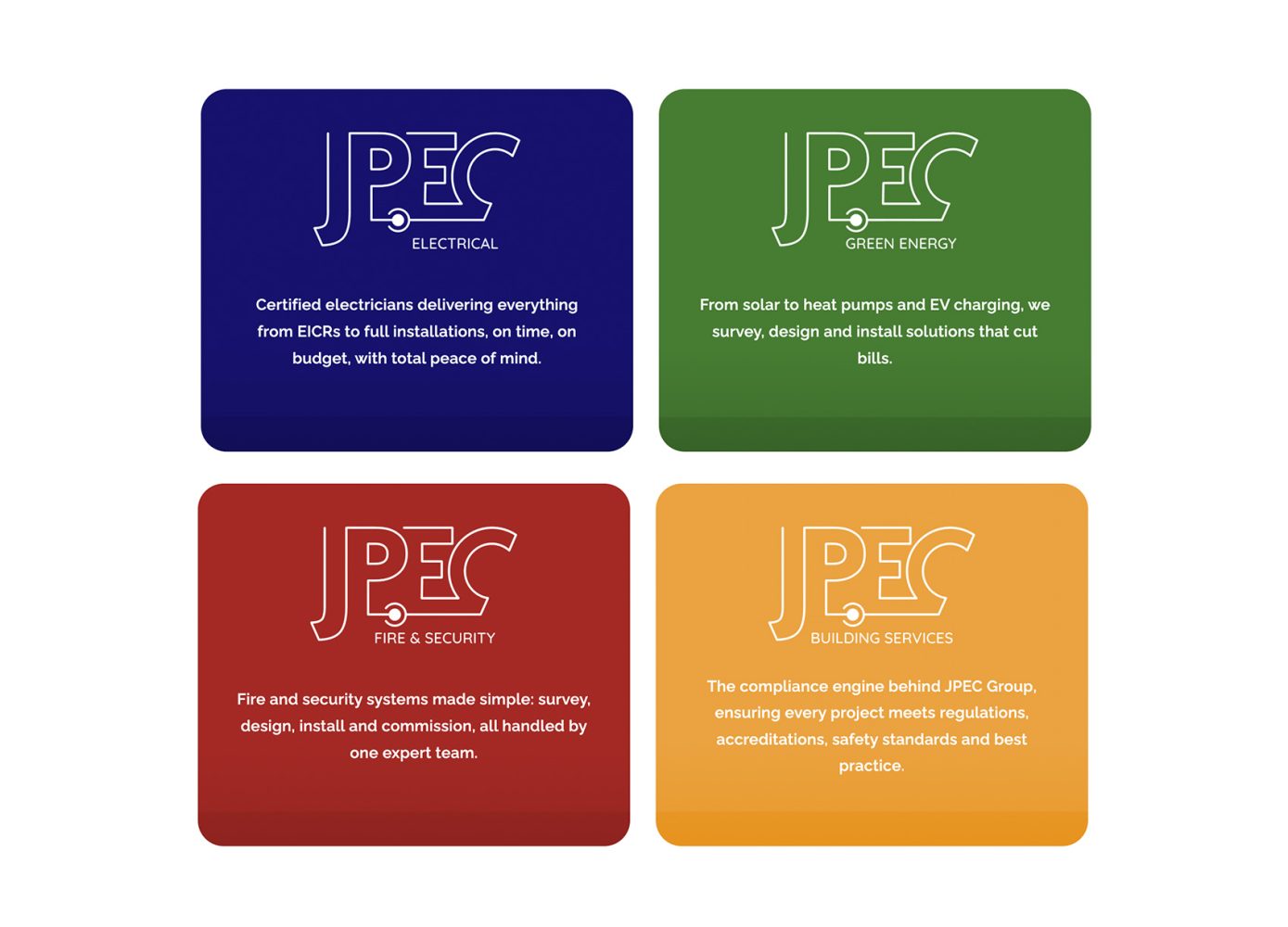
In practice, that might include electrical work, green energy systems, fire and security, mechanical systems, inspections, testing, commissioning and the compliance side that sits behind them. JPEC Group describes its offer in those terms, with electrical, green energy, fire and security services supported by a building services and compliance function, and says it carries projects through from feasibility surveys and design to installation, commissioning, testing and certification.
Why do people choose this model?
The main reason is coordination.
When several systems overlap, problems often happen at the edges between trades. A solar and battery job may affect your electrical setup. A heat pump project may involve electrical upgrades, controls, pipework and compliance checks. A commercial site may need power, emergency lighting, fire systems, access control and inspection records to line up properly.
Using separate firms can still work, but you are more likely to become the person joining everything together. That can be fine on a very simple job. On a more complex one, it often creates delays, repeated site visits and confusion over who is responsible for what.
How can it save you time and hassle?
A good one-stop shop reduces the number of separate decisions and handovers you have to manage.
Typical benefits include:
- one survey process instead of several separate visits
- one design conversation where services are considered together
- fewer scheduling clashes between trades
- less risk of duplicated work
- a clearer chain of responsibility if something needs changing
This matters whether you are a homeowner in Reigate planning an EV charger and consumer unit upgrade, a landlord in Redhill arranging inspection, remedial works and safety certification, or a business in Crawley trying to keep disruption to a minimum during trading hours.
It does not mean there will be no disruption. Access still has to be arranged, equipment still has to be installed, and testing still takes time. But a joined-up team usually makes the process more orderly.
Where are the benefits strongest?
The benefits are strongest when more than one service affects the same property or system.
Common examples include:
- solar panels, battery storage and EV charging
- heat pumps with associated electrical and control work
- electrical upgrades that also need inspection, testing and certification
- commercial or agricultural sites needing lighting, power, fire systems and compliance support
- sites where ongoing maintenance and records matter, such as rented properties, public buildings and multi-use premises
This is where a joined-up approach can be worth real money and time, not because each individual task becomes magically cheaper, but because the overall project tends to run more smoothly.
JPEC Group presents this as one of its core strengths, saying clients do not need to become “part time project manager” when several disciplines are involved.
Does it improve compliance and safety?
Often, yes, and this is one of the strongest arguments for it.
Compliance is not just paperwork at the end. It affects design decisions, installation methods, testing, certification and whether systems are commissioned properly. If the compliance function is treated as an afterthought, you can end up with delays, extra cost or remedial work.
A better setup is where compliance is considered from the start. JPEC Building Services describes its role as supporting the group’s electrical, green energy and fire and security work by making sure projects meet regulations, accreditations, safety standards and best practice.
For you, that usually means:
- fewer surprises late in the job
- clearer documentation
- better handover records
- more confidence that systems have been installed and commissioned correctly
Qualified installation and commissioning matter. Even good equipment can perform poorly or become a safety issue if the design, wiring, controls or setup are wrong.
Is it always cheaper?
Not always, and it is better to be realistic about that.
A one-stop shop can reduce wasted time, repeat visits and coordination problems, but that does not automatically mean the lowest quote on paper. A cheaper headline price from several separate contractors may look attractive at first, but the total cost can rise if responsibilities are unclear, work has to be revisited, or delays affect your home, tenants, staff or operations.
The better question is usually: does the whole project represent good value?
That means looking at:
- total project cost, not just one trade in isolation
- how much of the coordination burden falls on you
- how likely delays or rework are
- how important compliance, records and aftercare are to your property
For a simple single-trade job, a specialist on its own may be perfectly sensible. For a multi-discipline project, cheapest often stops being the best measure.
Who is this approach most suitable for?
It tends to suit people who want clarity, joined-up advice and one accountable team.
That often includes:
- homeowners planning more than one upgrade at the same time
- landlords who need work plus certification and records
- small business owners who cannot afford drawn-out disruption
- agricultural customers with mixed electrical and mechanical needs
- councils or larger organisations managing safety, compliance and ongoing maintenance across sites
It may be less important if your job is very small, very specialist, or limited to a single straightforward task with no overlap into other services.
JPEC Group says it works with domestic, commercial and agricultural customers, while JPEC Green Energy says it covers Surrey and West Sussex, including Horley, Reigate, Redhill and Crawley, with survey, design, installation, commissioning and servicing.
What are the trade-offs and possible downsides?
The biggest risk is assuming “one-stop shop” always means “best at everything”. It should mean joined-up delivery, but you should still check experience, accreditations, scope and who is actually doing the work.
Watch for these points:
- make sure the scope is clearly written down
- check what is included in survey, design, installation and handover
- ask who handles commissioning and certification
- confirm what happens if extra works are discovered
- understand the aftercare and servicing arrangements
There is also a practical point. One provider can simplify the process, but you still need a proper survey and design. No reputable installer should promise exact outcomes without looking at the property, usage and constraints first.
JPEC Green Energy’s own wording is sensible on this point. It says systems are bespoke, tailored to the property and needs, and that it will explain what is right for you and what is not.
What does the process usually look like?
Most projects follow a similar path, even if the details vary.
- Initial discussion about the property, site or operational need
- Survey to assess suitability, access, existing services and constraints
- Design and quotation
- Installation planning and scheduling
- Installation and any necessary testing
- Commissioning, handover and certification
- Ongoing support, maintenance or optimisation where needed
That is one reason a coordinated provider can help. Instead of you relaying information between multiple firms, one team can carry the project through. JPEC Group and JPEC Green Energy both describe their service in that end-to-end way, including survey, design, installation, commissioning and support.
What should you ask before choosing a provider?
Ask practical questions, not just price questions.
Useful ones include:
- Have you done similar projects for my type of property or site?
- What parts of the job do you handle directly?
- What approvals, testing or certification will be needed?
- What disruption should I expect?
- What could delay the job?
- What aftercare or servicing is available?
This matters just as much in Surrey or West Sussex as anywhere else in the UK. Older properties, mixed-use buildings and agricultural sites often have site-specific quirks that only come out during a proper survey.
JPEC Green Energy positions itself as a local installer that can survey, design, install, commission and explain trade-offs in plain English, which is the kind of approach worth looking for on any multi-service project.
What happens after installation?
Aftercare matters more than many people expect.
Depending on the system, that may include:
- user handover and basic training
- monitoring or performance checks
- servicing and maintenance
- support with settings or optimisation
- keeping certificates and records in order
A one-stop shop can be especially useful here because you are not left working out which contractor to call when two systems interact.
JPEC Green Energy can help
If you want clear advice on a project involving electrical, green energy, mechanical or compliance-related work, JPEC Green Energy can help with survey, design advice and a proper quote based on your property, site and usage. As part of the wider JPEC Group, they present themselves as an experienced local team serving Horley, Reigate, Redhill, Crawley, Surrey and West Sussex, with support from first survey through installation, commissioning and ongoing advice. For next steps, contact JPEC Group.
This article is general information, not personal advice. Any recommendation should be confirmed through a proper survey and design process based on your specific property, site conditions, systems and energy use.